

走進 ISNPR 2025:學生探索營養精神醫學的全球突破
2025/11/28
2025/11/28
分享至
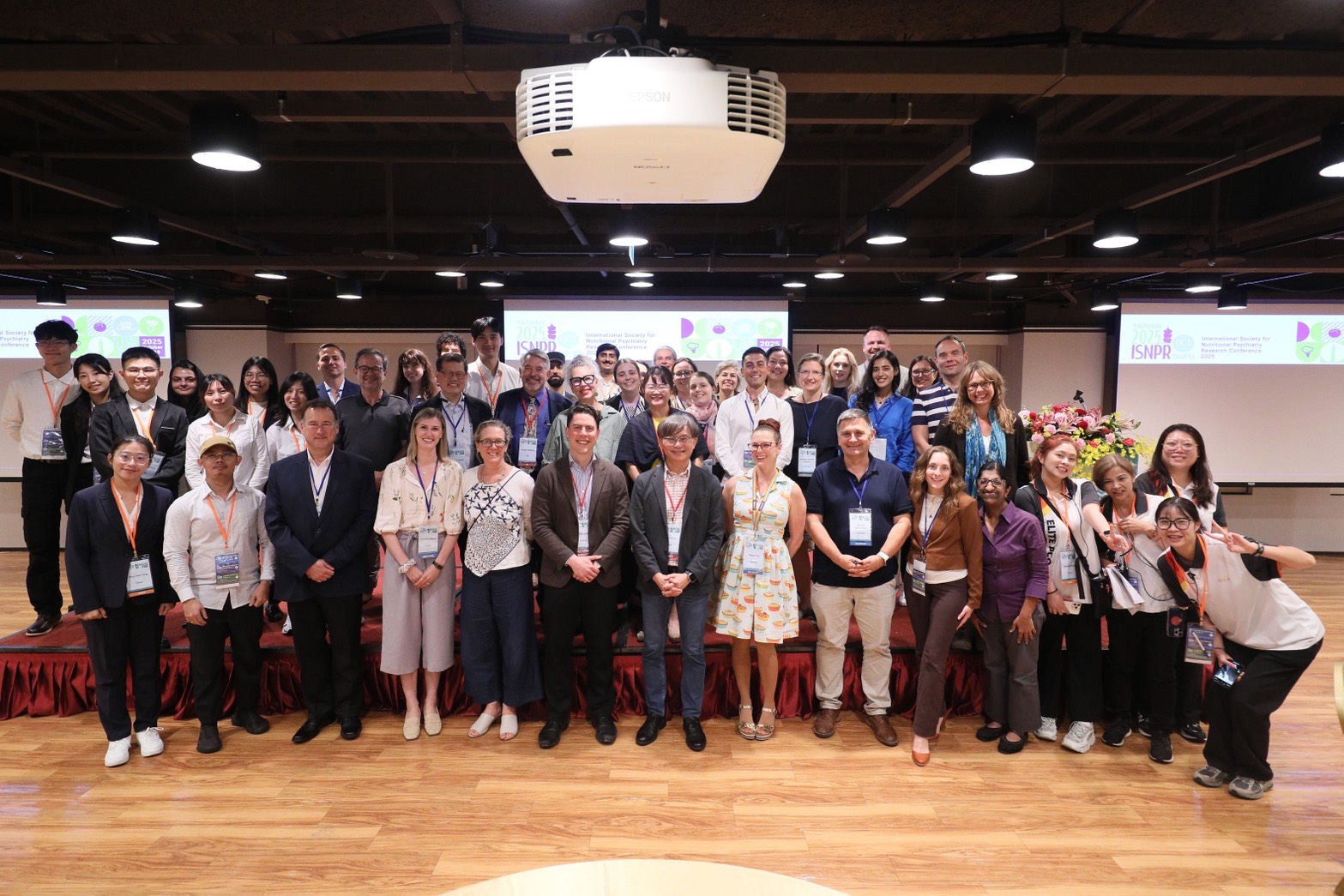
2025ISNPR 工作人員及學生團體照。其中第二排中間為TSNPR 學會 張倍禎理事長 ,第一排中間為蘇冠賓 常務理事與Dr. Wolf Marx ,學生Ayesha Zafar Iqba (第三排左三)、 Muhammad Yaseen (第四排中間 )、 Ikbal Andrian Malau (第一排左二)、Suet-Kei Wu (第三排左四)、Atif Mehmood (最後一排中間 )
身心介面研究與健康中心的學生近日參與 2025 年 ISNPR 國際會議,近距離接觸快速發展中的「營養精神醫學」領域。他們深入了解飲食與腸道微生物如何影響心理健康與認知老化,並與全球頂尖研究者交流。於本報告中,學生們分享了他們的重點心得,帶來國際研究趨勢、臨床實務應用,以及營養如何塑造未來心理健康照護的深度洞察。
博士生Ayesha Zafar Iqbal參加了 「營養精神醫學臨床實務的進展:全球視角」 的專題場次,該場次從跨國比較的角度,介紹各地將營養融入心理健康照護的做法。來自英國、德國、奧地利、瑞士、芬蘭及巴西的講者分享了他們的進展與所面臨的挑戰。英國的 Kevin 醫師介紹了 NHS 正在建立的結構化臨床流程與多專業合作模式。中歐團隊則強調以政策與機構為主導,將研究成果轉化為標準化臨床實務。芬蘭提出營養相關專業角色需要更明確的定位;巴西則談到資源有限、培訓不足與污名化等障礙。Ayesha 指出,儘管科學證據持續增加,真正成功的臨床落實仍有賴於系統整合、專業培訓以及跨領域合作的加強。
博士生Muhammad Yaseen參加了 「壓力與小膠細胞(Stress and Microglia)」 的研討會,深入探討壓力、腸道微生物群與小膠細胞活性如何交互影響大腦與免疫功能。會中介紹的研究包括化療引起的腸道菌相改變及其對認知與行為的影響、壓力導致的腸道屏障破壞、「暗小膠細胞(dark microglia)」的新興概念,以及母體病毒感染對胎兒腦部發育的影響。Yaseen 指出,這場研討會凸顯了腸腦免疫軸的複雜性與不斷涌現的新知。
在海報展示環節中,博士生Dr. Do Le Quang 注意到營養精神醫學研究方法的多樣性,涵蓋臨床試驗、系統性綜述,以及青少年心理健康、飲食行為與腸道代謝物等相關主題。清晰且具吸引力的視覺呈現,有助於理解複雜研究內容,同時促進跨領域交流,充分展現該領域的廣度與科學嚴謹性。
博後研究員 Dr. Ikbal Andrian Malau博士參加了探討營養與心理健康分子機制的專題課程。演講內容涵蓋晚期糖基化終產物(AGEs)在神經退化中的作用、抑鬱症相關的發炎生物標誌物如 HMGB1、S100β 與 NSE、酮飲食對精神分裂症相關途徑的影響,以及抗氧化物在維持大腦氧化還原平衡中的角色。此外,運用計算方法識別潛在分子靶點的研究,也凸顯了這些發現的轉譯應用潛力。Ikbal 指出,這些課程加深了他對營養、炎症與氧化壓力如何交互影響心理健康的理解。
博士生Suet-Kei Wu 參與的場次 「Nutrition and Mental Health Insights from International Psychologists in Clinical Practice」,是關於一個國際研究探討七個國家中再Nutrition and Mental Health Insights from International Psychologists in Clinical Practice從研究到臨床實務的落差 。對精神科醫師、心理學家、心理治療師及心理健康護理人員的訪談顯示,雖然營養被廣泛認為對心理健康至關重要,但其在臨床應用上仍受限於培訓、制度與時間等因素。研究強調,國際合作、制度支持及結構化培訓計畫對縮小這一落差、將營養知識落實於日常心理健康照護中至關重要。
博士生Atif Mehmood 參加了 「營養、老化與認知健康」 專題課程,重點介紹營養在促進健康老化與維持認知韌性方面的關鍵作用。研究顯示,足夠的蛋白質與多酚攝取有助於維持肌肉量並減緩認知衰退。來自日本與斯洛維尼亞的研究進一步強調營養狀態、肌少症與心理健康之間的關聯,同時指出膳食脂肪、纖維及文化因素對老年人整體健康也具有重要影響。
整體而言,ISNPR 2025 為學生們提供了營養精神醫學的全方位視野,內容涵蓋分子機制、
The 2025 ISNPR (International Society for Nutritional Psychiatry Research) Conference brought together leading experts and researchers from across the globe, offering students an exciting, immersive introduction to the newest developments in nutritional psychiatry. Through keynote sessions and poster presentations, students experienced firsthand how nutrition is shaping mental health research and driving innovation in clinical practice worldwide.
Ph.D. Student Ayesha Zafar Iqbal attended the session “Advancing Clinical Practice in Nutritional Psychiatry: A Global Approach,” which offered a comparative look at how different countries are integrating nutrition into mental health care. Speakers from the UK, Germany, Austria, Switzerland, Finland, and Brazil shared both their progress and the challenges they face. Dr. Kevin (UK) highlighted the NHS’s development of structured clinical pathways and strong multidisciplinary collaboration. Central European teams emphasized policy- and institution-driven efforts to translate research into standardized practice. Finland pointed to the need for clearer role definitions for nutrition professionals, while Brazil discussed barriers such as limited resources, insufficient training, and persistent stigma.Ayesha observed that while scientific evidence in the field continues to grow, successful clinical implementation still depends on system-level
integration, better professional training, and stronger cross-disciplinary collaboration.
Ph.D. student Muhammad Yaseen attended the symposium “Stress and Microglia,” where he explored how stress, the gut microbiome, and microglial activity interact to shape brain and immune function. The session featured research on chemotherapy-induced microbiome changes and their effects on cognition and behavior, stress-related disruption of the intestinal barrier, the emerging concept of “dark microglia,” and the influence of maternal viral infections on fetal brain development. Muhammad noted that the symposium underscored the complexity of the gut–brain–immune axis and the rapidly evolving insights within this field.
During the poster session, Ph.D. student Dr. Do Le Quang observed the wide range of research approaches in nutritional psychiatry—from clinical trials and systematic reviews to studies on adolescent mental health, dietary patterns, and gut metabolites. The clear and visually engaging posters helped distill complex findings and sparked interdisciplinary discussion, reflecting both the breadth and scientific rigor of the field.
Postdoc Dr. Ikbal Andrian Malau attended S19 session--Nutritional and Molecular Innovations in Mental Health that examined the molecular mechanisms linking nutrition and mental health. Presentations covered the role of advanced glycation end products (AGEs) in neurodegeneration, inflammatory biomarkers such as HMGB1, S100β, and NSE in depression, the impact of ketogenic diets on schizophrenia-related pathways, and how antioxidants support brain redox balance. Computational studies identifying potential molecular targets further highlighted the translational promise of these discoveries. Ikbal remarked that these sessions enriched his understanding of how nutrition, inflammation, and oxidative stress intersect in shaping mental health.
Ph.D. student Suet-Kei Wu took part in the session, “ Nutrition and Mental Health Insights from International Psychologists in Clinical Practice “ This session focused on international study exploring the research-to-practice gap iofin seven countries. Interviews with psychiatrists, psychologists, psychotherapists, and mental health nurses revealed that, while nutrition is widely recognized as vital for mental health, its clinical application is often limited by training, system, and time constraints. The study highlighted the importance of international collaboration, institutional support, and structured training programs to help bridge this gap and bring nutritional insights into everyday mental health care.
Finally, Ph.D. Student Atif Mehmood attended the session “Nutrition, Aging and Cognitive Health”, which highlighted the critical role of nutrition in supporting healthy aging and cognitive resilience. Adequate intake of protein and polyphenols was linked to maintaining muscle mass and mitigating cognitive decline. Research from Japan and Slovenia also emphasized the connections between nutritional status, sarcopenia, and mental well-being, while dietary fats, fiber, and cultural factors were shown to influence older adults’ overall health.
Overall, ISNPR 2025 gave students a comprehensive view of nutritional psychiatry, spanning molecular mechanisms, gut–brain interactions, clinical implementation, and aging. The conference expanded their academic perspectives while providing valuable insights into global research trends, interdisciplinary collaboration, and emerging directions shaping the future of the field.
撰文者 :Ayesha Zafar Iqba 、 Muhammad Yaseen 、 Ikbal Andrian Malau 、Suet-Kei Wu 、Atif Mehmood 、Dr. Do Le Quang
審稿者 : 張倍禎 理事長

